MPlate: Make Better Food Selections
Duration: Sep, 2019-Dec, 2019 (3 months)
Course: Interaction Design; Individual Project
My Role: UX Researcher, Interaction Designer
Techniques Used: Surveys, Interviews, Affinity wall, Storyboards, Brainstorming, Competitive analysis, Paper prototypes, User testing, Digital prototypes
Problem Statement
According to Journal of Nutrition and Human Health (2018), the transition to college gives students more freedom to choose what to eat, which could also lead to either bad or good eating habits. Students tend to choose food based on taste, convenience, and cost. The students’ inability to develop better eating habits could influence their long term health, both physically and psychologically. Some challenges that I have identified for first-year students based on background research fell within three areas: personal, social and societal. (see the chart below)
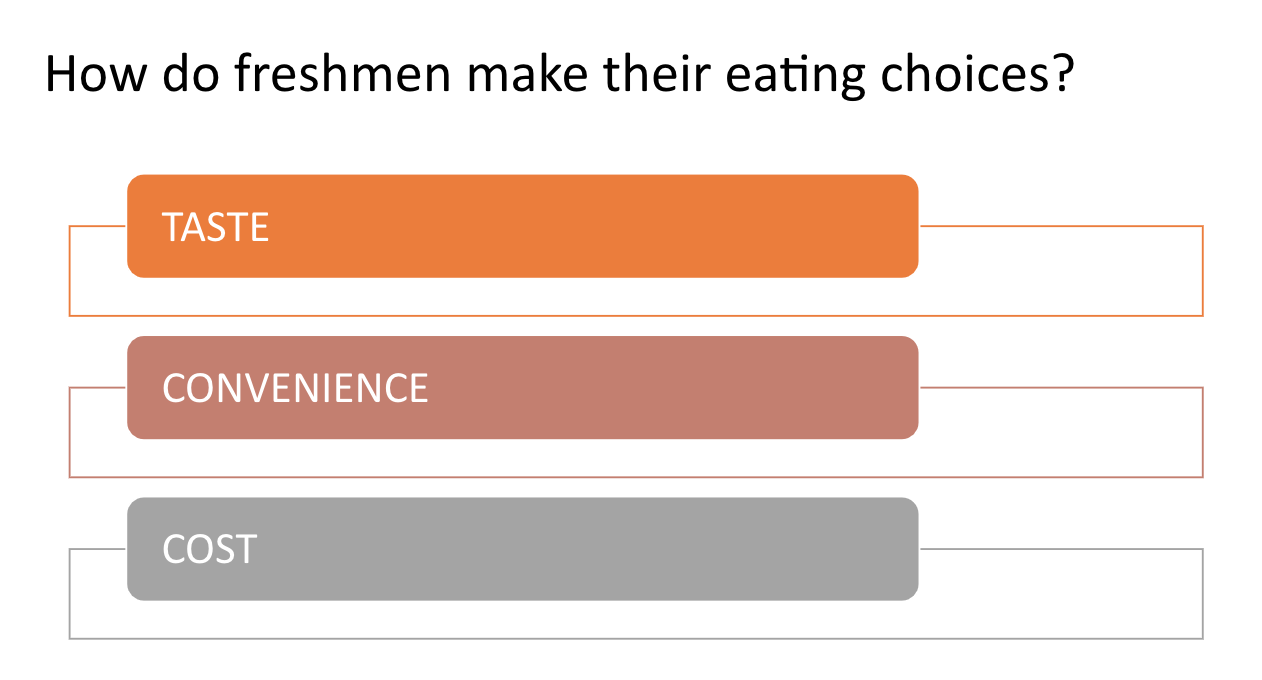
Based on the article College students eating habits and knowledge of nutritional requirements (Abraham, S. at al, 2018)
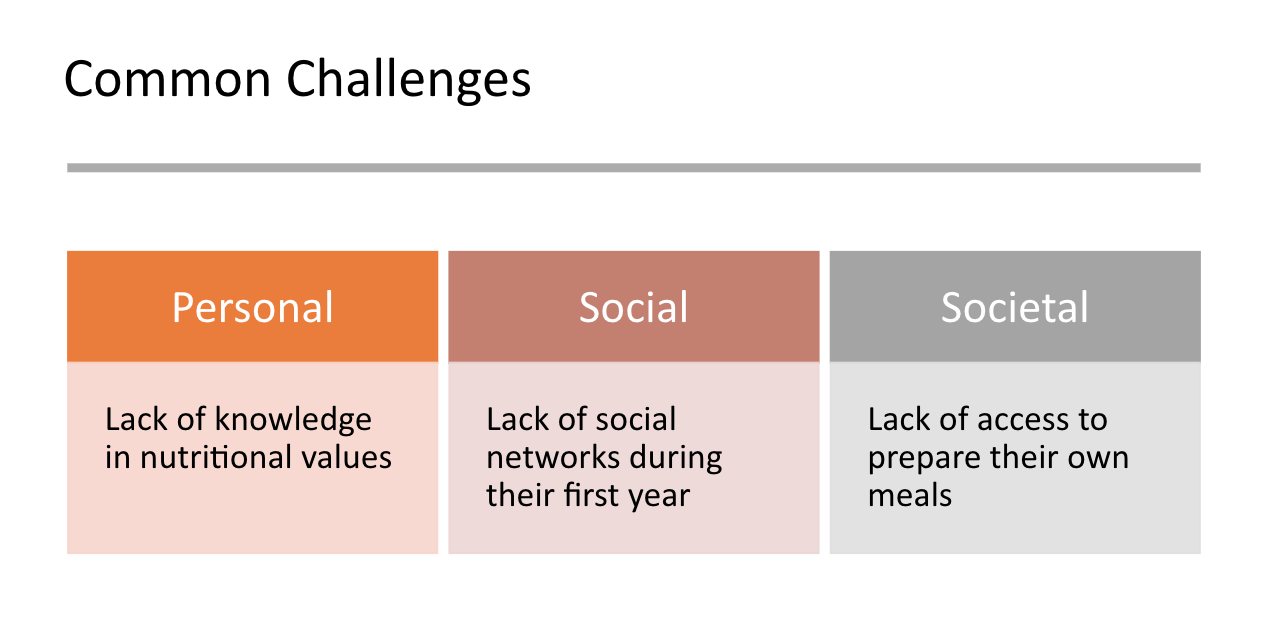
Some challenges causing unhealthy eating habits among freshmen fell within three areas. (based on my personal experience and literature reviews)
Project Goal
After identifying the common challenges faced among those group of students, I decided to focus my project goal on helping freshmen develop healthier eating habits by improving their nutritional knowledge, build social networks with the condition of lack of access to kitchen.
Surveys
To understand the problem better and avoid my assumption of my target audience, I created a survey and received 25 valid responses from freshmen at the University of Michigan. I was able to learn about major eating patterns that freshmen tend to have. This process also provided me with some contacts to further interview with. Below are the response from the survey:
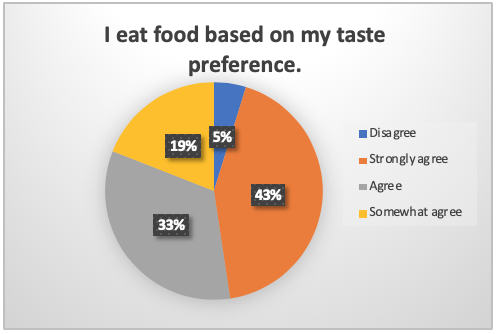
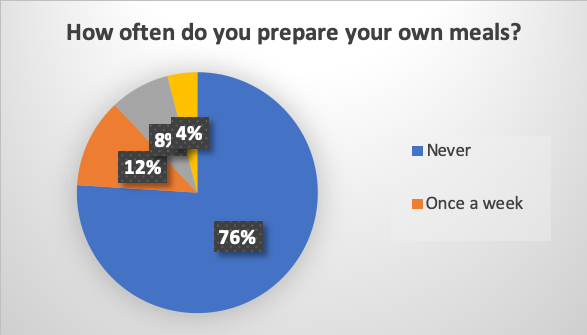
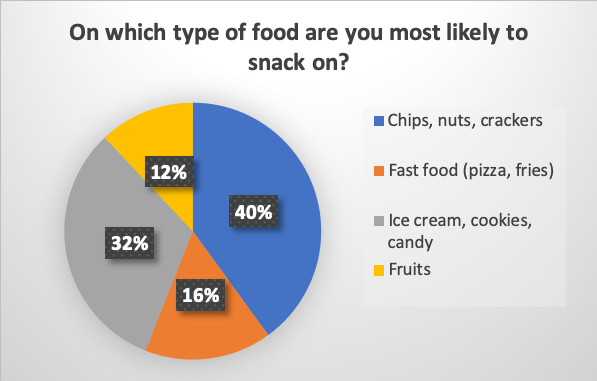
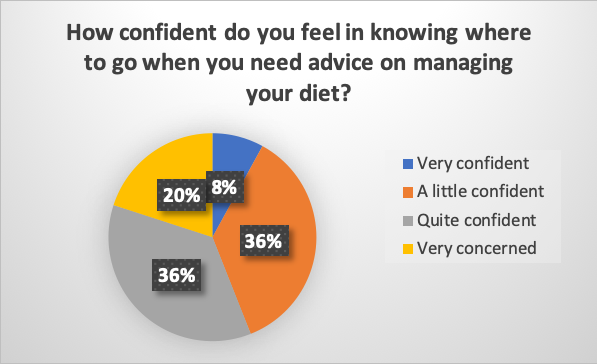
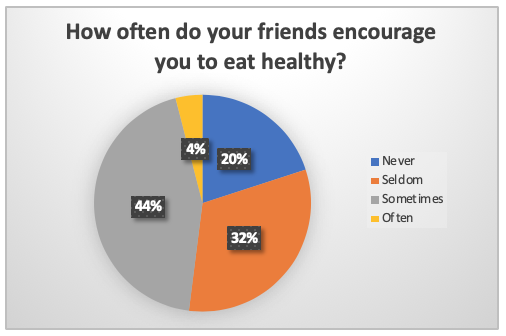
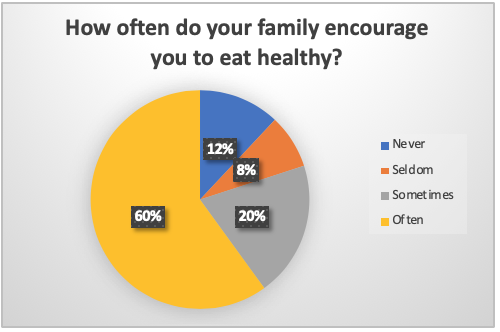
From the survey I found:
Freshmen rarely prepare their own meals
They made food choices mainly based on tastes.
Freshmen leave their family and invest more time with their social networks on campus. However, based on the survey data they might receive less support on their friends on how to healthier compared to from their family members.
Storyboards
Some early sketches (the picture is clickable)
I used storyboarding techniques to sketch out 8 possible solutions to my problem including out-of-the-box ideas. The key was to brainstorm different concepts. I hoped to test my early concepts with my users during in-person interviews.
Interviews
I selected 3 survey respondents who indicated that they didn’t prepare meals and hoped to improve their eating habits for further interviews. I asked them about food preferences, what resources they used to maintain a healthy diet and their perception on the role of social support in maintaining healthy diets. I also tested the design concepts during the interviews.
Interview quotes
“I have used some fitness apps to track my daily intake. However, the serving sizes in dining hall are not as accurate as it should be which makes it hard to track what you eat.”
“I do hope people surrounding me care more about healthy diet.”
“College types of food are defined as tasty, convenient and open-late.”
“Everyone has different daily needs so it is hard to use a standard calorie intake to measure healthy.”
“I think I might eat more protein or more grain on a particular day based on my body needs.”
“I liked the scanning function since I could track food quickly.”
“Sharing food dairy is the most appealing function for me.”
In addition, they didn’t like the meal planning concepts since they think the idea would be time-consuming; they also thought that food pyramid is too complicated.
Synthesized Findings
Combining my surveys and interviews, below are the key findings that I learned from my research:
Dining hall is their main place to have meals. They rarely prepare meals.
Everyone has different food preferences and dietary restrictions.
Food tracking is treated as difficult as the serving size in the dining hall menu is different from what is in their own plate.
Students tend to not knowing the appropriate proportion they should eat for each category of food.
Freshmen lack sufficient social networks to encourage them to eat healthier.
Based on these findings, I decided to use the dining hall as the context of the app and design a food tracking tool that both promotes healthy eating style and helps them record accurate serving size. After some background research, I decided to use MyPlate model to define what is considered as healthy food in my app.
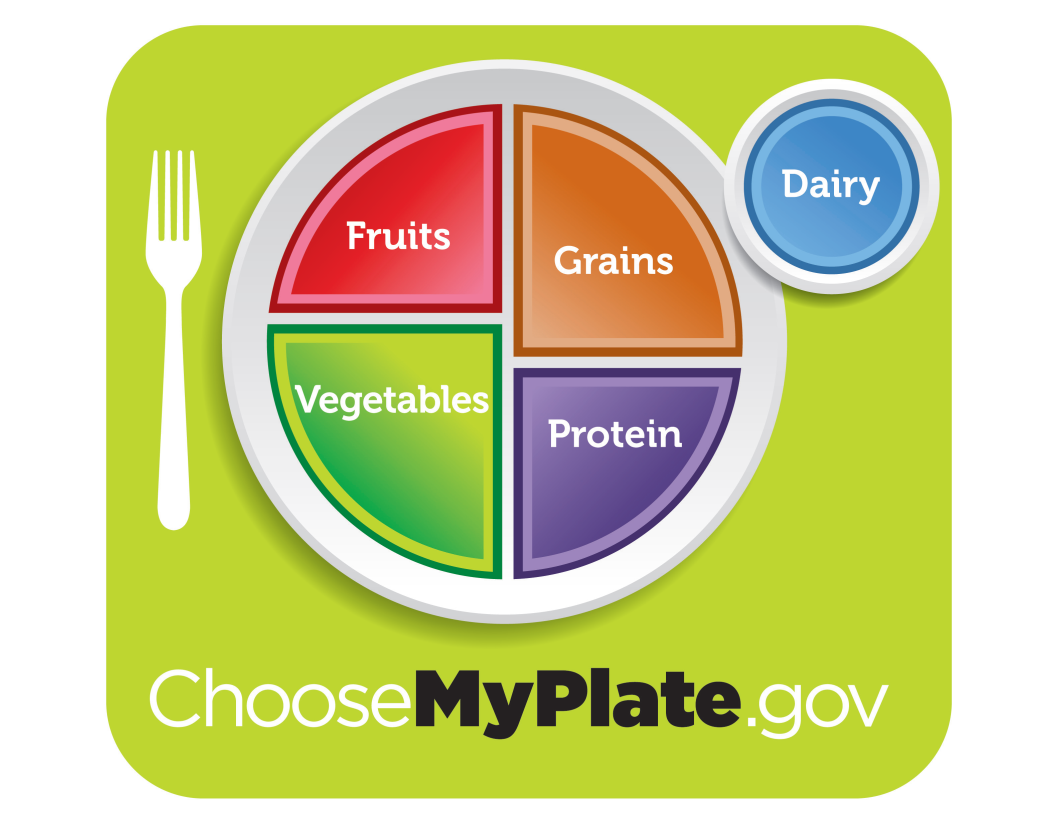
Why did I choose MyPlate model?
“The Pyramid was designed to be a teaching tool to communicate the DGA as a whole and represented what and how much to eat over the course of a day. In contrast, the MyPlate icon is a simple, yet powerful, visual cue to prompt consumers to think about their food choices across food groups and to build a healthy plate at meal times.”
--- Journal of Nutrition Education and Behavior.
Persona
Before starting prototyping my ideas, I designed the following 3 personas and 1 anti-persona to inform myself what type of students I planned to design for and who I didn’t plan to design for.
Persona 1
Persona 2
Persona 3
Anti-Persona: Who I am not designing for
Paper Prototypes
In order to test my design concepts, I created paper prototypes and presented to my target audience. I hope to receive feedback about how they liked about the MyPlate model and use those feedbacks in my future design. My initial idea was to filter out healthy options in dining hall menu and have students select pre-made healthy plates based on their food preferences and dietary restrictions, given their desire to efficiently check meals explored during the interviews.
After testing this prototypes with my users, I received the following feedback:
“I like the pre-made plate model and I think it is a way to promote eating a balanced diet.”
“Pre-made plates are convenient but I think it also helps to have people choose no-plate model(to build their own plate).”
“When scanning the food I would like a choice to edit my portion size so it could be as accurate as what I actually eat.”
“Maybe giving some instructions on how to scan the food would be helpful.”
I realized that the main feedback feel within tracking methods. Specifically, the pre-made plates allowing them to choose meal and then track those meals might be a little unrealistic given the fact that some students prefer free-style of eating. Therefore, I decided to run a competitive analysis to gain inspirations on how other system design the tracking methods.
Competitive analysis
To gain some inspirations and see what had been implemented in the market, I ran a competitive analysis on different apps that have similar design concepts. I learned strengths and weaknesses from those apps which helped me make further design decisions.
Competitive analysis gave me inspirations on how to design my apps and also give me clear vision of what has been made possible in the market and what was left unimplemented. I found that apps that adopted MyPlate model does not enable the food tracking feature, for apps that have implemented food tracking function did not have clear guidance on how to make healthier choices (my approach to adopt MyPlate model will help solve this weakness); All apps have personal goal setting functions, but at different levels. For most of the fitness apps, users have limited options to set their personalized goals with a free account.
Based on the strengths and weakness of each product, I decided to include the following features in my app:
Adopt the MyPlate model in my app to define healthy food choices
Provide multiple tracking options to improve the efficiency and accuracy of food tracking; in addition, users are able to adjust the quantity of standard serving sizes
Ability to set personal goals for each group of food and the calorie intake
Ability to interact with other students in U-M community
Allow users to filter those healthy options based on taste preferences and allergens
A most updated MyPlate Model:
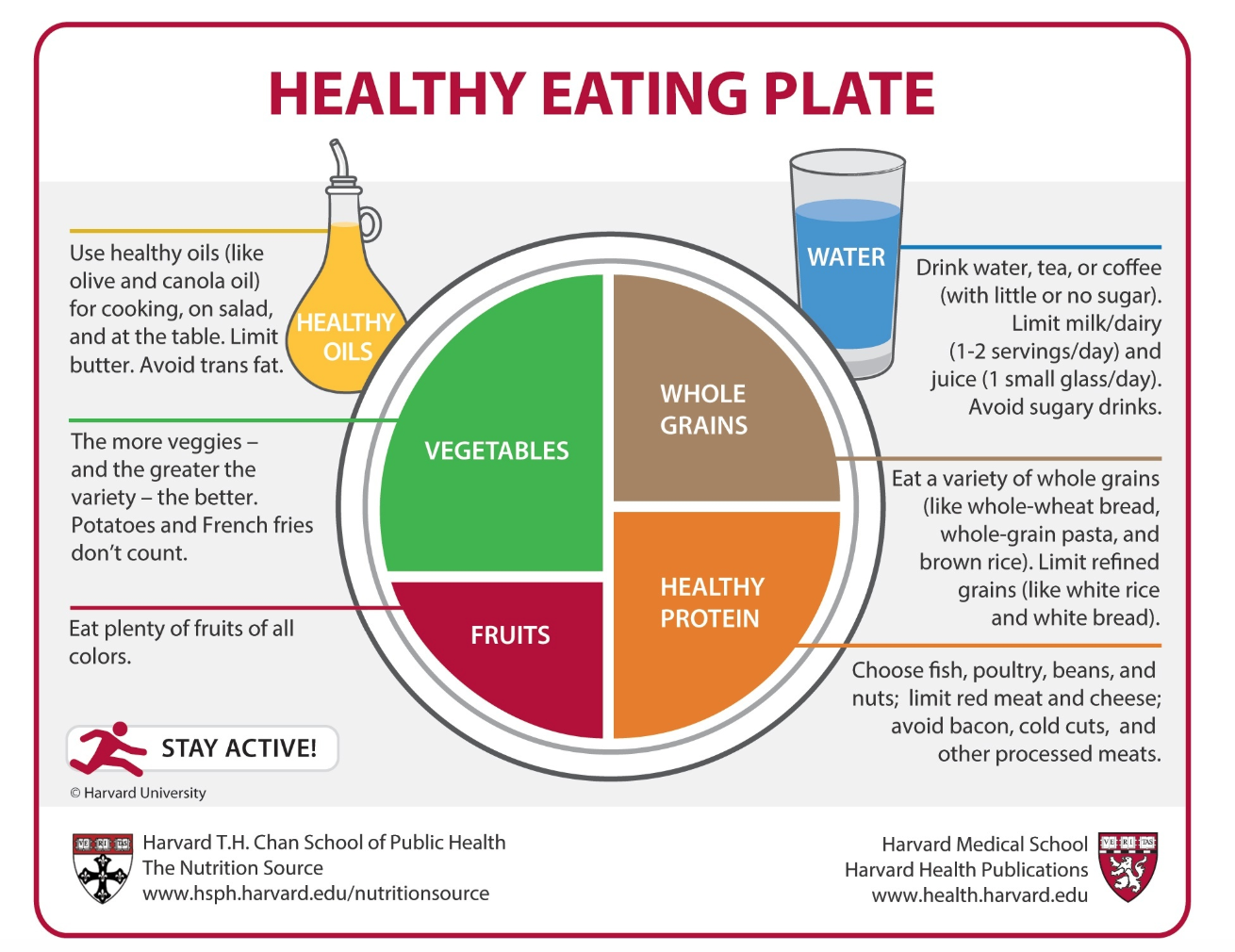
For my final prototype, I decided to update the USDA MyPlate Model with Harvard Healthy Plate to define “healthy choices” in my app after doing more background research. I found the updated model might better serve the needs of students, especially those who have dietary restrictions. If you are interested in seeing how Harvard Healthy Plate might be different from USDA MyPlate model, please check out the website.
Final Prototype
After a series of research and iterations, I finally designed a food tracking app particularly for all Freshmen at UMich. I would like to walk you through some key features of the app that I designed for my final prototypes:
1.Customized to individual needs
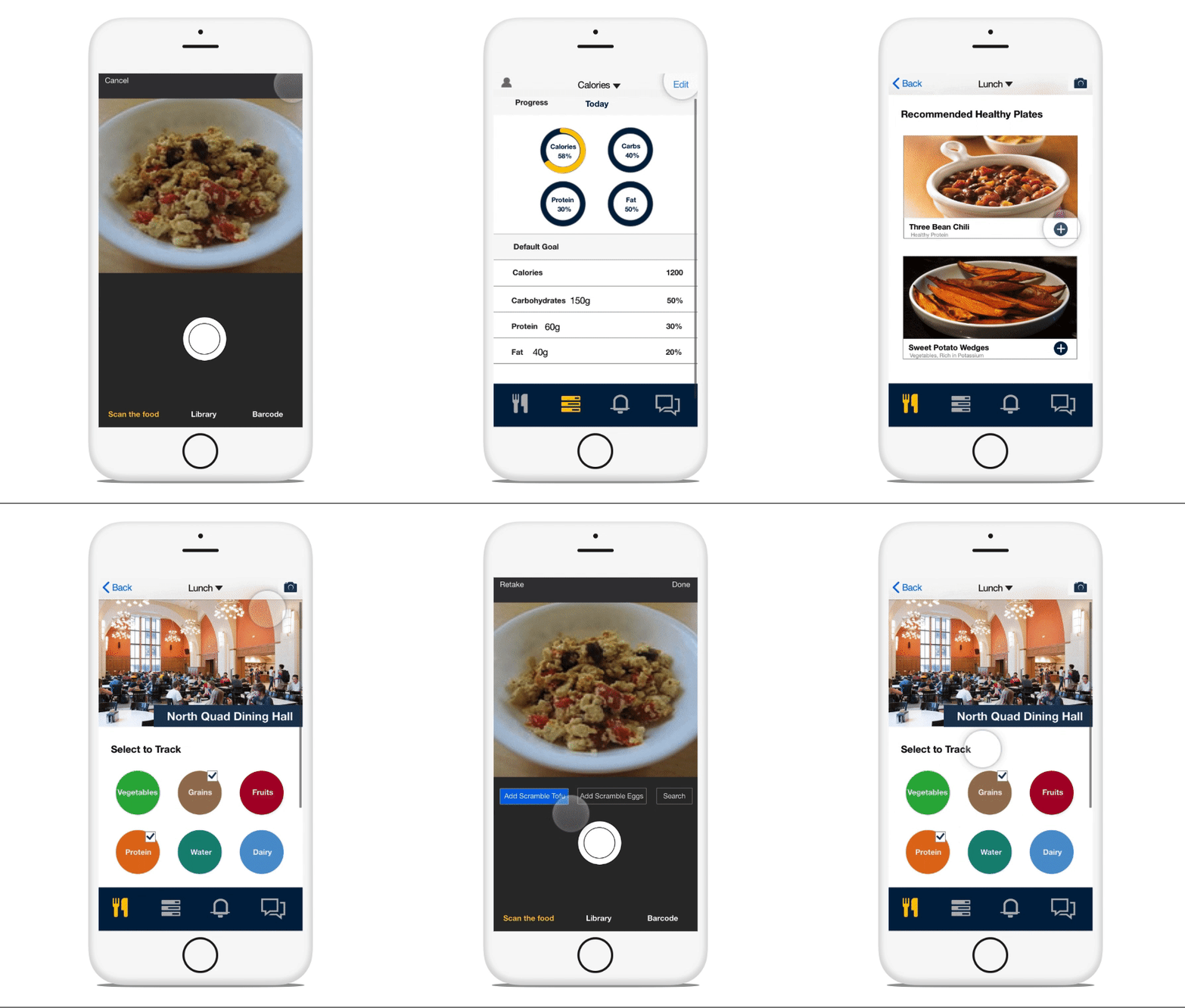
When users select one type of food group to track, the system will generate the healthy options in the dining hall for them. Students are able to filter out options based on taste preferences, food allergens and allow them to edit quantity of serving sizes to match the portion size in their plate.
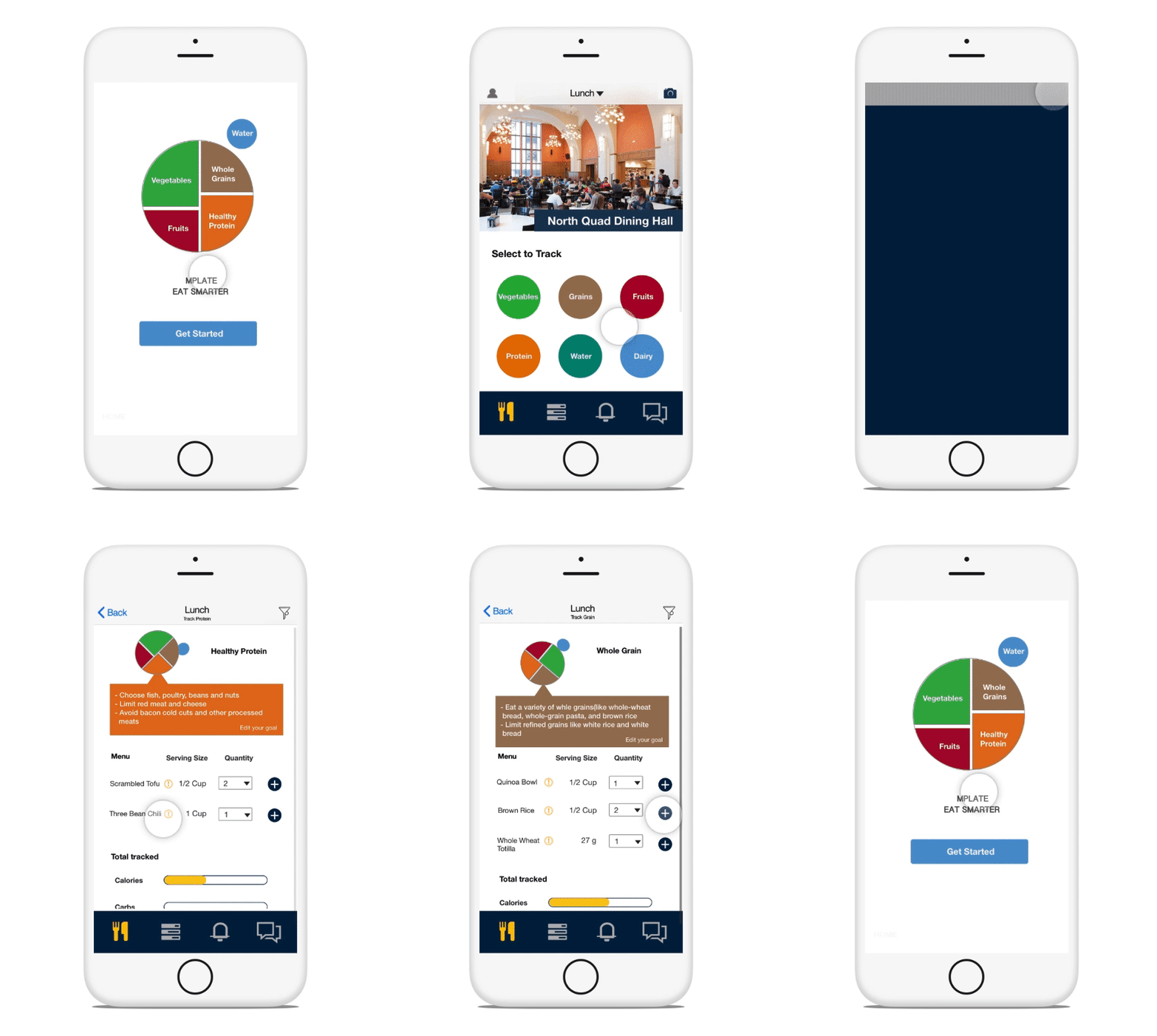
2. Accurately track food through flexible tracking methods
Users are able to select recommended healthy plates or choose to scan the food, scan the barcode or upload pictures from library, this improve the efficiency and accuracy of food tracking.
3. Goal Setting and Social Support
Customized goal setting and daily reminders allows students to track their food category and calorie goal; The system provides social support for freshmen by building an online forum discussing healthier eating habits.
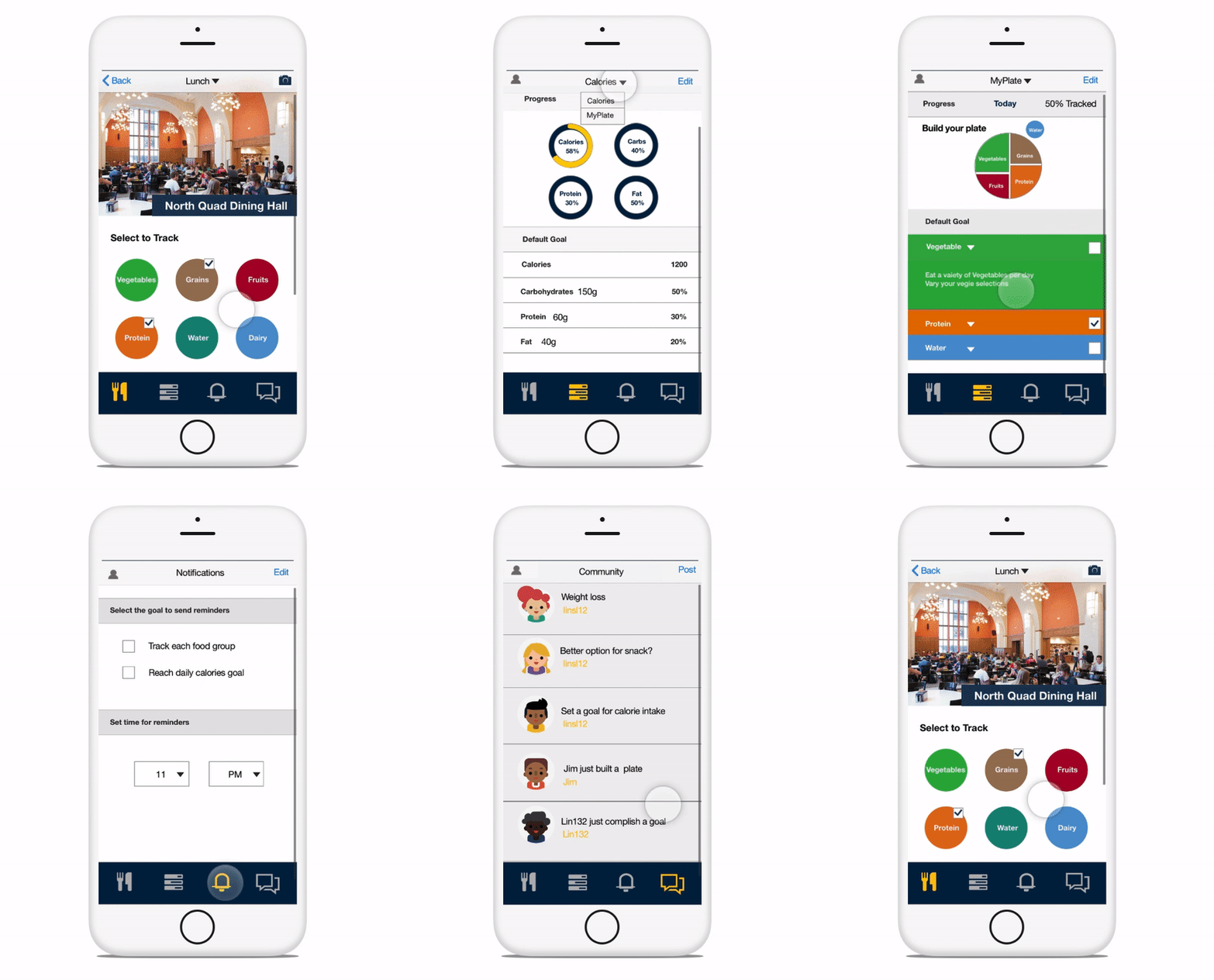
Please feel free to interact with my digital prototypes using the InVision link. I would like more feedback of how you think of the MPlate App!
Here is how I measure the success of my design:
Customize needs for freshmen in the University of Michigan
Have clear definition of what type of food is healthy
Flexible tracking choices make tracking food convenient and accurate
Set and track their goals of categories and healthy food choices based on the Healthy Plate Model.
There are some unimplemented features in my app which I would like to think upon:
I would like to continue developing the features of goal setting. For example, I would like to implement some positive incentives when users reach their goals.
I would like to do more heuristics analysis and usability testing for the high fidelity prototypes.
Project Take Aways
Design is an iterative process. Sometimes I have to go back to my research or competitive analysis to see what improvements should be added to the project.
Thinking is the way of making! While collecting data from users helped clarify user needs, it is also worth testing some early concepts so we know what directions to take for next steps. Sometimes designers have to make the best assumption and move forward.
We need to build products that consider various needs of people, for example, people have dietary restrictions; people from different cultural backgrounds.