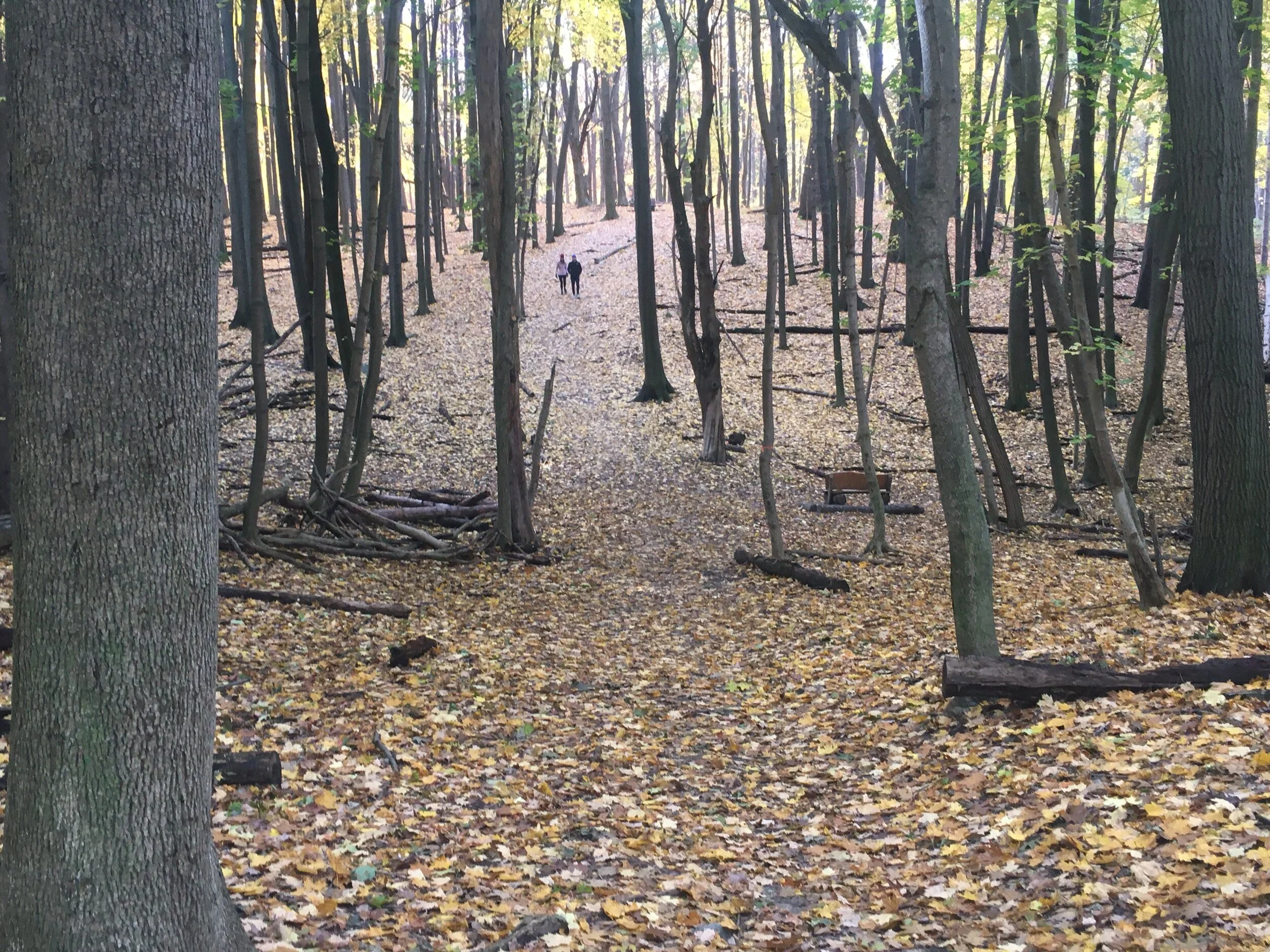
Picture taken during the field visit
Streamlining Photo Collection Process
Duration: Sep, 2019 - Dec, 2019 Client: City of Ann Arbor Natural Area Preservation
Team size: 5 My Role: Project Manager, UX Researcher
Skills learned: Developing protocols, Contextual interviews, Qualitative data analysis, Affinity diagrams, Contextual design
Problem
Our client Natural Area Preservation (NAP) started the photo monitoring program to collect photos from volunteers. Photo monitoring is the process of taking photos at the exact same place to capture the same view across different seasons or years. The main goal was to keep a record of NAP’s restoration efforts. Volunteers took the photo and followed the instructions to rename the photo before uploading to Dropbox. However, not all volunteers would follow the instructions to rename the photo and upload the photo with an expected format, which made the process of collecting and sorting photos extremely time consuming for our client. Another part of the program is to track volunteer hours. Our client had to guess the hours each volunteer did for each outing and put them into the system because some volunteers tend to forget reporting the hours. Our client looked for an efficient way to collect and sort photos volunteers submitted, and ways to improve the volunteer program.
Contextual Inquiry
Our team applied contextual inquiry methodology to investigate this issue. We started the process by developing an interview protocol for three different stakeholders: internal stakeholders within Natural Area Preservation, photo monitoring program managers from other organizations and volunteers with different proficiency level of photo monitoring. Themes explored throughout the interview protocol included program managers and volunteers’ motivation in starting or participating in the photo monitoring program, their daily responsibilities or typical tasks associated with this program, the techniques the program managers have used to manage the photo monitoring program or volunteer program, if applicable.
We conducted 6 in-person interviews and 2 secondary phone interviews totally. For each in-person interview we had two team members show up: one was responsible for taking notes and the other maintained the main flow of the interview. We interviewed two internal stakeholders, one program manager from other photo monitoring program and three volunteers, volunteers’ level varies from novice, between novice and experienced, and experienced. During the interview with internal stakeholders and program managers we observed how they handle their work related to photo monitoring in their office and have a conversation based on the themes we explore in the protocol; during interviews with volunteers we asked them questions while observing them doing the photo monitoring task in one of the parks. After collecting our data we conducted secondary interview with our client and another program manager to clarify our findings and gain more insights.
Annotated interview notes during field visits
Reflection after interviews
Qualitative Analysis
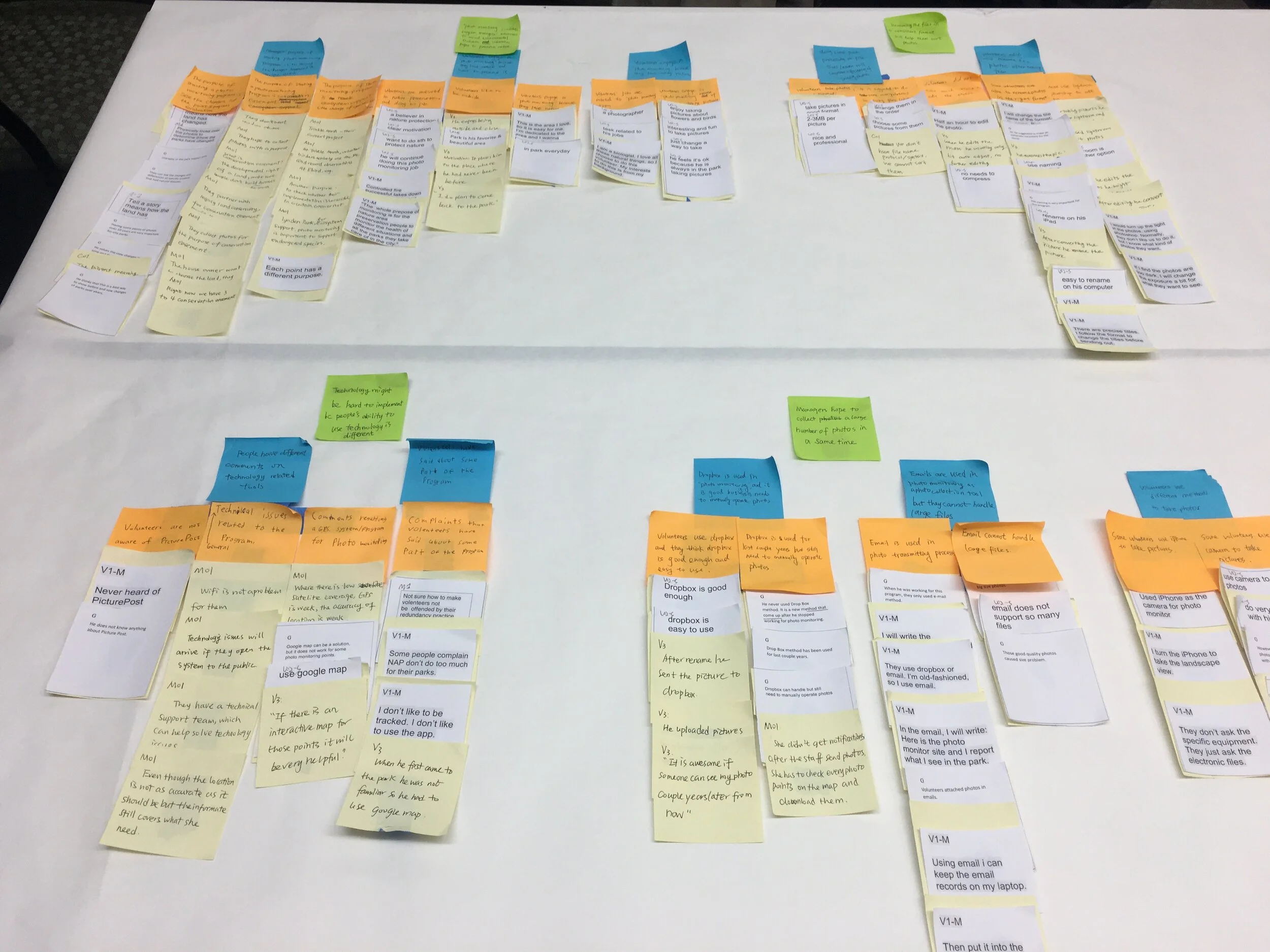
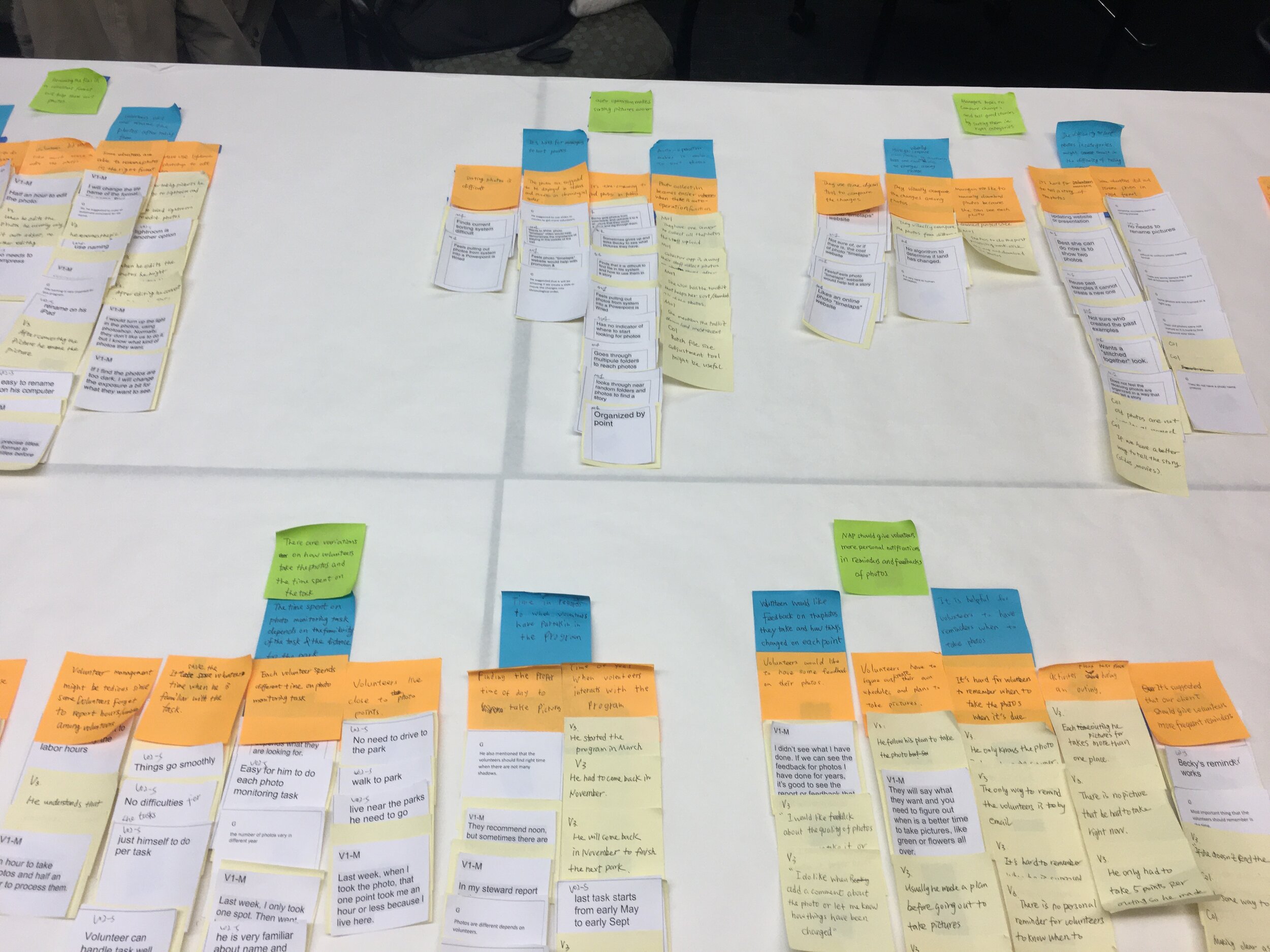
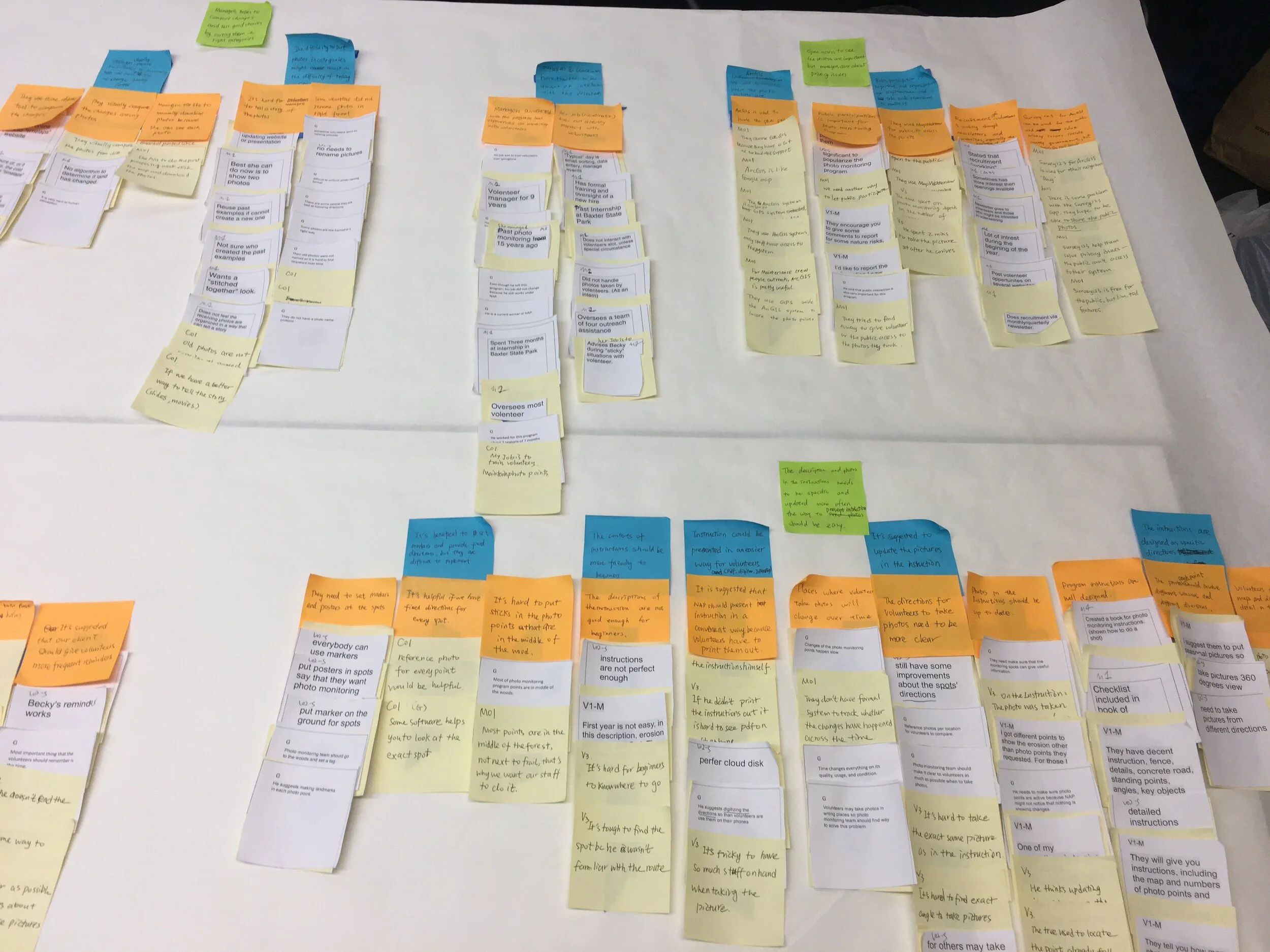
After completing each interview, two team members who conducted the interview transcribed their interview notes from the recording and made it available to everyone in the team. We turned the interview insights into affinity notes and on average we have had 40 to 60 notes from each interview. The goal is to produce one note per minute of the interview. After writing down more than 300 notes we grouped them into different categories and used orange affinity notes to write down common theme among the grouped yellow notes. We repeated the grouping process for another two times using blue and green notes. The high-level green notes synthesized our findings from those seven interviews. Please see some pictures of our affinity wall below:
Secondary Interviews
After analyzing our data, we conducted secondary interviews to clarify some questions we had after we had analyzed the first round of interview data. Our interviewees for the secondary interview were our client and a program manager from another organization. We asked our client about their budget of the program and clarified some themes we discovered after conducting the affinity wall. We were also able to schedule another phone interview with another program manager. We believed that the program manager faced a similar problem as our client did but might has come up with better solutions on how to manage the photo monitoring program. The interviewee was recommended through one of the program managers from the first round of interviews. Secondary interviews helped us further synthesize our findings, brainstorm and converge our recommendations.
Key Findings
Our main findings from the affinity wall are:
Some photos were not updated in the instruction
Auto-operation makes sorting pictures easier. Managers hope to download photos in correct format, file them in different folders and be able to create stories and tell changes when needed.
The instruction should be updated to receive accurate photos. This means making the description easier for beginners, updating the most recent photos and considering a more convenient format instead of PDF.
Volunteers’ abilities to adapt to new technology and the privacy needs are two concerns when photo monitoring program managers adapt to a new technology and open their service to the public.
The communication between volunteers and manager needs to be more active and frequent. We noticed an issue addressed among most of our interviews: the salient communication gap between our client and the volunteers, below were some quotes from the volunteer and the client:
“I would like some feedbacks about the photos after submitting them.”
“Sometimes I might be too nice to our volunteers. When I saw tiny mistakes I would just ignore them. ”
Our Recommendations
1. Develop a Mentorship Program
We recommenced that our client continued a mentorship program that they original developed. We recommended pairing an experienced volunteer with an inexperienced volunteer based on skill level, park preference and location.
2. More Active Reminders and Feedback
The current method to interact with volunteers is to to manually send an email to each participant individually. However, the method is time consuming, tedious, and ineffective. We suggest using an email service to automate or schedule future email reminders. We recommend Mailchimp. (see the dashboard picture below) It is a popular tool used in a diverse range of fields. Mailchimp will take a database of contact information and allow you to schedule and send customized emails automatically.
A screenshot of the Mailchimp Dashboard
3. Automatic Operation System to Collect Photos
In our findings we found that some kind of auto-operation system will make sorting photos and tracking volunteer hours easier for our client. We suggest that our client use technology support while considering different needs of volunteers. Applications such as LANDSCAPE mobile and ArcGIS (Survey123 & Collector) had been used for some of the similar organizations. We run a competitive analysis for these two systems and compared the features they offer (see the table below).
Due to confidentiality we are not able to share the report on the website. Please feel free to contact me if you are interested in seeing the report and our final presentation. The following video introduces the process of building an affinity wall.
Project Take Aways
This project helped me gained experiences on contextual inquiries, qualitative data analysis and interview protocol creation. Our team turned our observation and interview data from field visits and remote interviews into 330+ affinity notes and built an affinity diagram to generate actionable insights. This helped determine our goal for next steps. Furthermore, I also gained experience on project management by serving as a leader for this project.
When being in the field to conduct interviews, interviewer should balance the need of listening and taking notes. During this project, I learned how to take quick field notes while listening carefully what the participant had to say. This project built a strong foundation for other qualitative research methods I use and introduced me the power of KJ method and how to use it to generate high level insights.